How Loquora Is Changing Communication Without Language Barriers
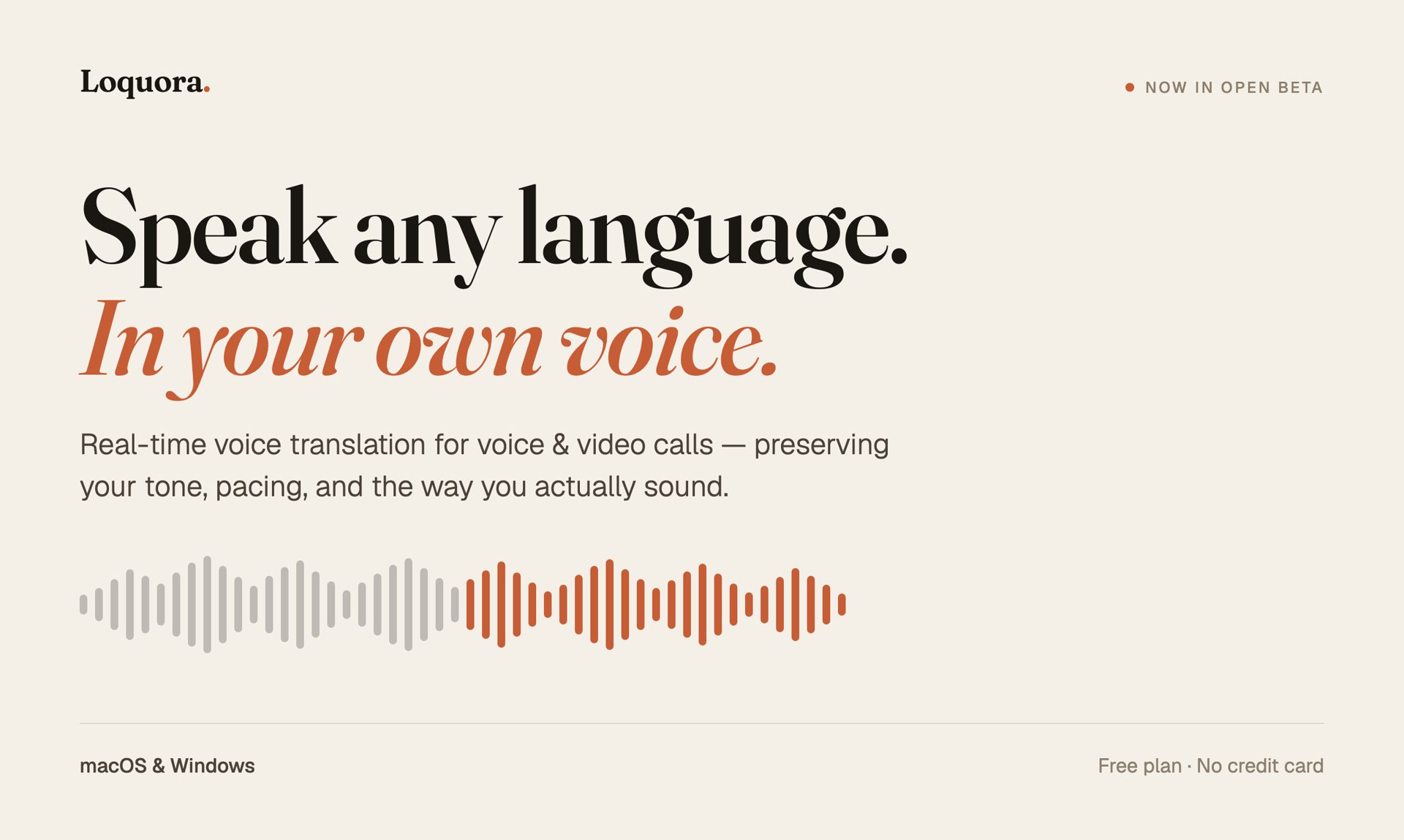
Just a few years ago, talking to someone who didn't speak your language almost always meant bringing in an interpreter or using an app with consecutive translation. Today, AI technology has taken the next step — enabling near real-time conversation while keeping it natural. Loquora is one such solution: a next-generation voice translation platform.
What Is Loquora
Loquora is a real-time speech translation service. Its main difference from traditional translators is that the other person doesn't hear a flat, synthesized voice — they hear a voice that sounds as close as possible to the speaker's own.
To build a digital voice model, a user only needs to record about a minute of speech once. After that, the system uses AI to preserve timbre, intonation, speech rhythm, and other voice characteristics when translating into another language.
How the Technology Works
Loquora works in a few steps:
- The user records a short sample of their voice.
- They choose the languages they'll be speaking.
- During a call, the service recognizes speech, translates it, and voices it in the other person's language, keeping the characteristics of the original voice.
The whole process takes about one second of latency, which keeps the conversation feeling natural.
Compatibility with Popular Services
One advantage of Loquora is that you don't need a dedicated messenger. The platform works as a virtual microphone or browser extension and can be used with popular video-calling services, including Zoom, Google Meet, Microsoft Teams, Telegram, Discord, and other apps that support WebRTC.
Key Features
Today Loquora offers a wide set of features:
- real-time speech translation;
- preserving your individual voice sound;
- support for 32 languages;
- automatic detection of the other speaker's language;
- incoming speech translated as subtitles;
- switching languages mid-conversation;
- support for multilingual conferences;
- apps for Windows and macOS, plus a browser extension.
Where Loquora Can Be Used
International business
Companies can run negotiations, presentations, and meetings without bringing in interpreters — especially useful for sales, investor talks, international consulting, and partnership projects.
Education
Students and teachers can talk with foreign colleagues without language limits, while also getting a chance to practice languages in live conversation.
Remote work
International teams get a tool for daily calls without having to switch to one shared working language.
Personal communication
Loquora helps people stay in touch with friends, family, and people from other countries, making the conversation feel more natural and emotional.
Why Keeping Your Voice Matters
Most translators play back the translation in a standard synthetic voice, which makes the conversation feel less alive and often strips out its emotional tone.
Loquora aims to preserve the characteristics of a person's speech: intonation, pace, pauses, and the character of their voice. As a result, the other person experiences not just a translation, but the feeling of talking to an actual person rather than a program.
Advantages of the Platform
Among the platform's main strengths:
- minimal translation latency;
- natural-sounding speech;
- a wide range of supported languages;
- integration with popular video-calling platforms;
- a simple setup process;
- a free plan to try out the service.
Possible Limitations
Like any modern machine translation system, Loquora doesn't guarantee perfect accuracy. When using professional terminology, legal documents, or medical consultations, it's worth double-checking the translation.
Quality also depends on a stable internet connection and the quality of the source audio.
Where This Is Heading
The growth of generative AI is making voice translation technology one of the fastest-growing fields. What used to be seen as one of the main obstacles to international communication is increasingly becoming a technical problem that's already being solved.
Loquora shows a new approach to communication, where translation becomes almost invisible and the conversation keeps its natural, emotional feel. As the technology keeps advancing, solutions like this could become as familiar a tool as video calls or automatic captions are today.
Conclusion
Loquora isn't just an online translator — it's a next-generation platform that combines speech recognition, machine translation, and voice cloning. It lets people speak different languages while keeping their own way of communicating, which makes international negotiations, education, and personal conversations significantly easier.
If this pace of progress continues, language barriers may stop being a serious obstacle to communication between people around the world within just a few years.